
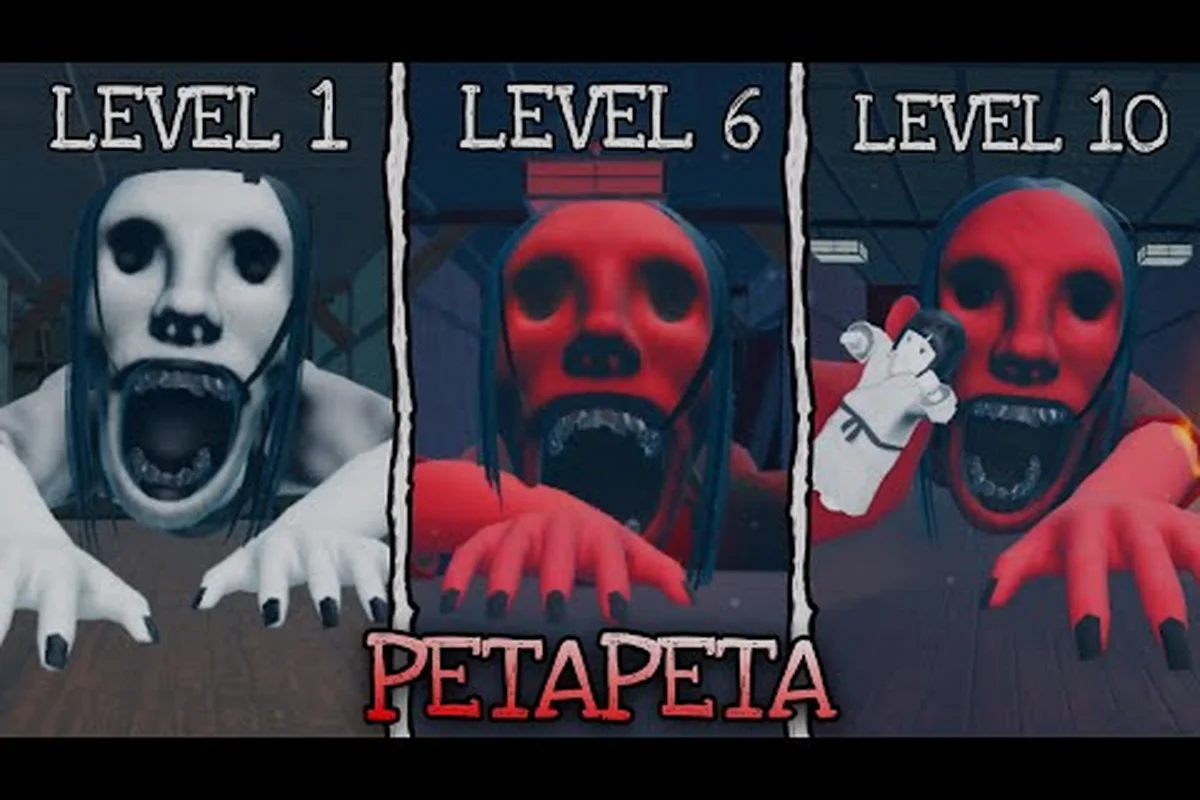
PETAPETA hides its real payoff behind branching conclusions, and this PETAPETA endings guide maps every route so you can reach the true finale without a second blind playthrough. Knowing which choices lock you out of the best conclusion is the difference between a satisfying finish and a hollow one, so the path below is built to get you to full completion in a single focused run.
How PETAPETA endings actually branch
The ending system in PETAPETA is not a single final choice — it is a chain of decisions that accumulate across your run. Each level you clear and each interaction you resolve nudges a hidden tracker, and the game only reveals which ending you earned once the final level closes. According to community reports, most players finish their first run on the neutral conclusion simply because they never realized earlier choices mattered.
Three variables drive the outcome: level completion order, monster encounter outcomes, and story event responses. The tracker is invisible during play, which is why a PETAPETA completion guide is worth reading before you commit to a route rather than after.
| Ending | Trigger Condition | Difficulty to Reach | Replay Required |
|---|---|---|---|
| Hollow Ending | Miss 2+ story events, rush the final level | Very easy (default) | No |
| Neutral Ending | Complete all levels, ignore optional events | Easy | No |
| Warden Ending | Complete all levels, resolve every monster encounter | Moderate | Sometimes |
| True Ending | Full completion + all story events + secret route | Hard | Often |
The table above reflects how the branches stack. Notice that the Hollow Ending is the accidental default: if you skip story events to save time, the game quietly routes you there. The True Ending sits at the opposite end and demands that nothing be left unfinished.
A useful mental model is to treat PETAPETA as three overlapping checklists rather than one story. Levels are the skeleton, monsters are the muscle, and story events are the connective tissue. Skip any layer and the ending you receive reflects the gap. Players who understand this early avoid the frustration of finishing the game and discovering they were two events short of the best conclusion.
If you want the full picture of how each level fits into the sequence, the complete levels list breaks down the progression order that the ending tracker depends on. This matters more than it first appears: level completion order is one of the three tracked variables, so clearing stages out of the intended sequence can shift your route before a single monster encounter is resolved. Cross-reference the list against your current save to spot skipped optional stages early — those gaps are exactly what push a run toward the Hollow Ending default, and catching them before the final level closes is the difference between a salvageable Neutral run and a forced replay.
The level and choice checkpoints that decide your ending
Every ending in PETAPETA is decided at specific checkpoints, and missing one does not always announce itself. The checkpoints fall into three categories, and each one silently updates the ending tracker the moment you pass it. Level checkpoints are the easiest to lose: they fire on stage clear, so a single failed run on the stage that gates an ending branch locks you out of that route for the rest of the playthrough with no on-screen warning. Choice checkpoints are the opposite — they only register when you confirm a dialogue option or interaction prompt, meaning a stray button press during a cutscene can commit you to a branch you never intended. Because the tracker updates invisibly at each pass, the only reliable way to audit your progress is the ending tracker screen in the pause menu, which lists every branch you have and have not yet triggered.
Level completion checkpoints
Clearing a level is not enough on its own — the order matters. The tracker rewards players who finish levels in the intended sequence and penalizes those who backtrack or skip. Community testing suggests that out-of-order clears can quietly shift you toward the Neutral Ending even if you complete everything else correctly.
| Checkpoint | What It Checks | Ending Impact |
|---|---|---|
| Level 1 clear | Whether you explored the opening area fully | Small nudge toward True |
| Mid-game levels | Order of completion | Large shift if out of sequence |
| Final level entry | Number of unresolved events | Locks the branch |
| Final level exit | Total completion percentage | Determines final ending |
Story event checkpoints
Story events are the most commonly missed layer. They appear as optional interactions, and the game never flags them as mandatory. Each resolved event adds weight to the True Ending route, while each ignored event subtracts from it. If you are chasing PETAPETA all endings, you will eventually need to see both the ignored and resolved versions of these events.
Monster encounter checkpoints
Monster encounters feed a separate counter. Resolving an encounter peacefully versus aggressively produces different tracker values, and the Warden Ending specifically depends on a consistent approach. The monster guide explains which creatures appear where, which helps you plan encounters before they happen rather than reacting on the fly.
The practical takeaway is simple: treat every optional interaction as mandatory until you have seen the True Ending once. This matters most at the monster encounter checkpoints, where a single skipped patrol can leave the encounter counter one value short of the threshold the Warden Ending checks for. Run your first playthrough with a full sweep — talk to every NPC, resolve each encounter, and log every tracker value — then use that baseline save to deliberately skip events and branch into the alternate conclusions without re-clearing the whole route.
Step-by-step route to the true ending
This is the route that reliably produces the best conclusion, so treat it as a sequence rather than a menu. Follow it in order, and do not skip steps even if they feel optional — the tracker does not distinguish between "skipped" and "forgot," meaning a missed side interaction in the Level 1 opening area is recorded identically to a deliberately ignored one. Because the branch locks the moment you enter the final level, there is no post-hoc correction: the run's ending flag is written on entry, not on completion. That is why the order matters more than the individual steps — each one feeds the same completion counter the final check reads.
-
Clear Level 1 completely before moving on, including every side interaction in the opening area.
-
Resolve all story events as they appear rather than saving them for later, since some expire once you advance.
-
Handle monster encounters consistently — pick one approach and stick with it for the whole run.
-
Complete levels in the intended order and avoid backtracking unless a specific event requires it.
-
Verify your completion percentage before entering the final level, because the branch locks on entry.
-
Enter the final level only when everything else is finished, then follow the secret route prompt.
The most common failure point is step 5. Players assume the final level is just another stage and walk in with 80 percent completion, which permanently locks them out of the True Ending for that run. The game gives no warning, which is why the PETAPETA 100 percent guide emphasis on pre-final verification exists.
| Step | Common Mistake | Fix |
|---|---|---|
| Level 1 | Rushing past side areas | Sweep the whole area first |
| Story events | Saving them for later | Resolve immediately |
| Monsters | Mixing approaches | Stay consistent |
| Final level | Entering too early | Check completion first |
If you want to understand how the game's different modes interact with the ending tracker, the game modes overview clarifies which modes count toward completion and which are purely optional side content. This distinction matters more than it first appears: the completion counter that gates the True Ending only reads progress from modes flagged as story-canon, so time spent in optional side modes inflates your play clock without moving the percentage the final-level check actually consults. A player who clears every side mode but skips a single Level 1 story event still enters the final level below the threshold, while one who ignores side modes entirely but resolves all canon events clears it — which is why the mode overview is worth reading before you start the route, not after step 5 fails.
Tracking completion without a visible meter
PETAPETA does not show you a completion percentage during normal play, which is the single biggest reason players miss the True Ending. The tracker exists, but it is hidden. You have to infer your progress from what you have done rather than what the game tells you.
The reliable method is a manual checklist, because the hidden tracker only advances when every trigger fires in the order the game expects. Before entering the final level, confirm each of the following: a single skipped optional room or unresolved story prompt can silently lock you out of the True Ending branch and drop you into the Warden or Hollow variant instead, so verify each line against your own playthrough rather than trusting a vague memory of "clearing everything."
-
Every level cleared in sequence
-
Every story event resolved
-
Every monster encounter handled consistently
-
Every optional area explored
-
No backtracking left unfinished
Community data suggests that players who keep a written checklist reach the True Ending on their first attempt far more often than those who rely on memory. The gap is not about skill — it is about bookkeeping. Because the hidden tracker only advances when every trigger fires in the game's expected order, a single missed story prompt or skipped optional room can silently redirect you into the Warden or Hollow branch, and nothing on screen warns you it happened. A written checklist converts that invisible state into something you can audit line by line, which is why it outperforms even a careful memory of "clearing everything."
| Completion Layer | How to Verify | Risk if Missed |
|---|---|---|
| Levels | Revisit the level select screen | Neutral Ending |
| Story events | Check for any unresolved prompts | Hollow Ending |
| Monsters | Review encounter history | Warden Ending instead of True |
| Optional areas | Sweep each level fully | Partial completion |
The hidden tracker is also why the secrets and easter eggs guide is worth reading alongside this one — some secret interactions feed the same counter that the endings depend on, and missing them can quietly cost you the best conclusion.
Collecting every ending efficiently
Once you have seen the True Ending, collecting the rest becomes a routing problem rather than a discovery problem. The efficient approach is to plan your remaining runs around the fewest possible playthroughs. Concretely, that means treating the True Ending run as your anchor: it already forces full level completion plus the secret route, so the Warden Ending flags often trigger along the way without a dedicated attempt. From there, fold the Neutral Ending into a standard full-level run that skips optional events, and reserve one short Hollow Ending run for last — skipping two or more story events and rushing the final level takes the least time, so it costs little to slot in once everything else is banked. Ordering runs this way keeps you at three total playthroughs instead of four.
The Hollow Ending is the fastest to collect: skip two or more story events and rush the final level. Because this route bypasses the optional event triggers that gate the Warden and True Ending flags, it is the run most likely to be wasted if attempted early — you would still need a separate full-completion playthrough afterward. Slot it in last instead: with every other ending already banked, a single short run that skips two or more story events and rushes the final level costs almost nothing in total time, and the ending table's "1 short run" estimate confirms it never needs a second attempt.
The Neutral Ending requires completing all levels but ignoring optional events — the natural result of a straightforward run with no event hunting. Mechanically, this means clearing every stage's main objective while deliberately skipping the optional event triggers scattered through each level; those triggers are exactly what gate the Warden and True Ending flags, so a clean full-level run that touches none of them resolves to Neutral. The ending table confirms it as "1 standard run," and because it demands full level completion, it pairs naturally with your True Ending anchor run rather than needing a dedicated playthrough.
The Warden Ending needs consistent monster handling plus full level completion, but it does not require the secret route. In practice, "consistent monster handling" means clearing each stage's monster encounters without letting any flee or despawn before you resolve them — a lapse that can quietly void the Warden flag even on an otherwise complete run. Because the secret route is optional here, the Warden Ending sits between Neutral and True in difficulty: you still clear every level, but you skip the hidden-route detours that make the True Ending run so careful. This is why many players collect it accidentally on their way to the True Ending — the full-completion anchor triggers the Warden flags as a byproduct, and the ending table's "Often overlaps with True" note reflects exactly that.
| Ending | Fastest Route | Estimated Runs Needed |
|---|---|---|
| Hollow | Skip events, rush finale | 1 short run |
| Neutral | Complete levels only | 1 standard run |
| Warden | Levels + consistent monsters | Often overlaps with True |
| True | Full completion + secret route | 1 careful run |
Because the Warden Ending frequently overlaps with a True Ending attempt, most players only need three total runs to see PETAPETA all endings. The key is ordering them so that the True Ending run happens last, when you already know every event location and can move through the game quickly.
Frequently Asked Questions
How many endings does PETAPETA have?
PETAPETA has four distinct endings: Hollow, Neutral, Warden, and True. Each one is determined by a hidden tracker that weighs level completion order, story event resolution, and monster encounter consistency. Most first-time players land on the Neutral or Hollow conclusion without realizing earlier choices shaped the outcome.
Can I get the true ending on my first playthrough?
Yes, but only if you resolve every story event, complete all levels in order, and verify full completion before entering the final level. The branch locks the moment you enter that last stage, so there is no way to fix a missed event afterward. A written checklist makes a first-run True Ending realistic.
Does the ending affect my save file or New Game Plus?
Your save persists across runs, and completion data carries forward, which is why collecting the remaining endings after a True Ending run is fast. You do not need to rebuild progress from scratch, and previously resolved events stay marked in your records.
What is the most commonly missed requirement?
Story events. They appear as optional interactions with no mandatory flag, so players skip them to save time and unknowingly drift toward the Hollow Ending. Resolving every event the moment it appears is the single change that most improves your odds of reaching the best conclusion.
Reaching every conclusion in PETAPETA comes down to treating the game as three linked checklists rather than one linear story. Levels, story events, and monster encounters all feed the same hidden tracker, and the True Ending only opens when all three are complete before the final level begins. Plan your runs in order — Hollow first for speed, True last for certainty — and full completion becomes a matter of bookkeeping rather than luck.