The PETAPETA fanbase has grown into one of the most visually active communities around a Roblox horror experience, and the artwork is the fastest way to see it. Official key art sets the tone, but the fan art, edits and redesigns that PETAPETA fans post every month tell you far more about what the game actually feels like to play.
If you have ever wondered where the good reference images live, which pieces are actually from Omochi Studio, and how the fan community organizes its creative output, this breakdown covers all of it. You will learn how to tell official art from fan work, where the strongest creations get shared, and how to join in without stepping on anyone's toes.
What Defines the PETAPETA Fanbase Today
The PETAPETA fanbase is small enough that individual artists get recognized, yet large enough that new posts appear daily across group walls, video comments and art threads. That balance is rare for a Roblox title, and it shapes how the community behaves: people know each other's styles, remix each other's designs, and treat the official key art as a shared reference rather than a locked asset.
Three traits stand out when you spend time inside the PETAPETA fan community: a heavy lean toward character reinterpretation over original character design, a shared visual vocabulary built directly from PETAPETA official art and key art silhouettes, and a wave-based posting rhythm that spikes whenever a new teaser or trailer drops. Unlike fanbases that fragment into ship wars or tier-list arguments, PETAPETA fans funnel most of that energy into drawing the cast, which keeps the group wall and art threads focused on output rather than debate.
-
Character reinterpretation is the dominant genre — fans redraw the cast in their own line weight while keeping the silhouette recognizable.
-
Atmosphere pieces focus on lighting and dread, recreating the game's dim corridors with heavy shadows and muted palettes.
-
Redesign challenges appear in waves, usually after a new teaser drops and everyone wants to guess what a character might look like next.
-
Trailer stills get traced, recolored and turned into wallpapers, which makes official footage a constant source of fan material.
What makes this ecosystem work is that the source material is stylized but not overly detailed. Simple shapes invite imitation, and imitation is exactly what a healthy fanbase needs. According to community reports, most artists who post PETAPETA fan art started by copying a single official frame before developing their own approach — a pattern you will notice across nearly every gallery thread.
The result is a fanbase that functions as a feedback loop: official art inspires fan art, fan art generates discussion, and discussion pulls new players into the game. That loop is why the community keeps growing even between content updates.
PETAPETA Official Art and Key Art Explained
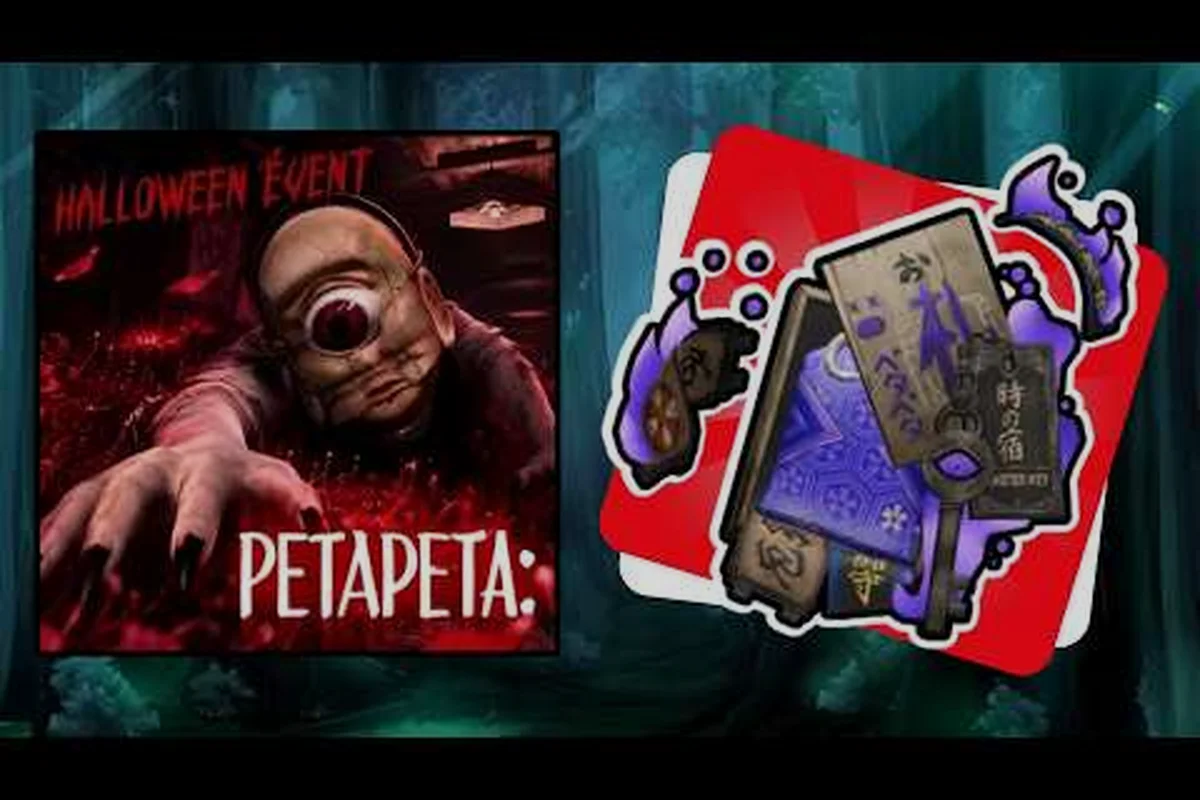
PETAPETA official art comes from Omochi Studio and appears in a handful of predictable places: storefront banners, teaser thumbnails, group page headers and promotional posts tied to updates. Learning to recognize these sources matters because reposted fan work is often mislabeled as official, and that confusion spreads fast inside a young community.
Where Official Pieces Actually Come From
The most reliable source is the studio's own channel, where trailers and teasers carry the highest-resolution frames. A single trailer can yield dozens of usable stills, and fans regularly crop them for avatars and banners. If you want to know which footage is genuinely from the developers, the official channel and trailer breakdown walks through what each release contains.
Key art, by contrast, is usually a single composed illustration rather than a frame grab. It tends to feature the full cast in a staged pose, uses stronger contrast, and carries a title treatment. Those three signals — composition, contrast, typography — are the quickest way to separate PETAPETA key art from a fan-made tribute.
| Art Type | Typical Source | Visual Signature | Best Use |
|---|---|---|---|
| Key art | Omochi Studio promotional posts | Full-cast composition, title text, high contrast | Wallpapers, banners, reference |
| Trailer stills | Official teaser videos | Cinematic framing, motion blur, letterboxing | Avatars, mood boards |
| Group page art | Community group headers | Simpler shapes, flat colors | Identifying active fan hubs |
| Fan art | Individual artists | Personal line weight, experimental color | Inspiration, redesign ideas |
Reading the Visual Language
Official pieces share a consistent palette: deep shadows, a narrow accent color, and faces that stay partially obscured. That restraint is deliberate, because horror reads better when the viewer fills in the gaps. Fans who understand this tend to produce stronger work, since they replicate the feeling of the art rather than just the character design.
A useful exercise is to compare a trailer still with a popular fan redraw side by side. You will usually find the fan version brightens the scene, adds detail to the costume, and sharpens the expression — all changes that make the character more readable but slightly less unsettling. Neither approach is wrong; they simply serve different goals.
Inside the PETAPETA Fan Community and Where Creations Live
Finding the PETAPETA fan community is easier than finding a single organized gallery, because creative output is spread across several surfaces rather than collected in one place. Group walls, video comment sections and short-form edit posts each host a different flavor of work, and knowing which surface to check saves a lot of scrolling.
The Main Creative Surfaces
The breakdown below reflects what PETAPETA fan community members actually report seeing, not an idealised content calendar: group wall posts skew toward sketches, WIPs, and open requests and appear daily, while video comments spike hard right after a new trailer drops and then get buried within hours. Short-form edits — animated tributes and transition loops — land weekly and depend almost entirely on the algorithm, whereas art threads move in monthly waves of finished illustrations and character redesigns, curated by the original posters themselves. That uneven rhythm explains why the same PETAPETA fan art can feel ubiquitous one week and invisible the next.
| Surface | Dominant Format | Posting Rhythm | Discovery Difficulty |
|---|---|---|---|
| Group wall posts | Sketches, WIPs, requests | Daily | Low — chronological |
| Video comments | Quick edits, screenshot shares | Spikes after trailers | Medium — buried fast |
| Short-form edits | Animated tributes, transitions | Weekly | Medium — algorithm driven |
| Art threads | Finished illustrations, redesigns | Monthly waves | Low — curated by posters |
The group wall remains the most accessible entry point because posts stay visible longer and artists often share unfinished work there. The community and group overview explains how the group structure works and why wall posts function as an informal gallery.
Why Redesign Waves Matter
Every time new footage appears, the community runs an unofficial redesign wave: artists take one character and reinterpret them under a self-imposed constraint, such as a different era, a swapped color scheme, or a non-human form. These waves are the single most productive period for PETAPETA fan art, and they generate the pieces that later get shared outside the group.
Redesign waves also serve a practical purpose. They let artists test ideas about where the story might go, which feeds directly into the theory discussions that dominate the lore side of the fandom. A costume detail invented by a fan sometimes ends up matching a later reveal, and those coincidences become community legends.
How PETAPETA Fans Share, Credit and Remix Art
Credit culture is the backbone of any healthy fanbase, and PETAPETA fans have developed informal rules that keep the ecosystem friendly while still allowing remix and reinterpretation to flourish. The short version: name the artist, link the original post, and ask before reposting outside the group. In practice this means crediting the specific PETAPETA fan artist rather than a vague "found on Pinterest," linking back to the original PETAPETA fan art thread so the creator gets traffic and feedback, and treating reposts of PETAPETA official art or key art as off-limits for edits unless the source is clearly marked. These norms matter because uncredited reposts bury the original creator in search results, and once a PETAPETA fan art piece loses its attribution trail, tracing it back to the artist becomes nearly impossible — which is why the community treats a missing credit as a fixable mistake first and a callout only as a last resort.
The Unwritten Credit Rules
Community members generally follow four expectations, and violating them is the fastest way to get a post removed. The first two are credit-focused: naming the artist directly in the caption even when the piece surfaced through a repost chain, and linking the original post instead of uploading a screenshot, so viewers can trace the artist's other PETAPETA fan art. The remaining two cover handling and attribution — asking permission before editing someone else's piece for color swaps or crop-based memes, and never presenting fan work as PETAPETA official art or leaked key art.
-
Always name the artist in the caption, even when the piece was found through a repost.
-
Link the original post rather than a screenshot, so viewers can find the artist's other work.
-
Ask before editing someone else's piece, especially for color swaps or crop-based memes.
-
Do not claim official work as your own, and do not present fan art as leaked material.
These rules exist because the fanbase is small enough that artists notice. A single uncredited repost can circulate widely before anyone corrects it, and the correction usually costs more goodwill than the original post earned. According to community reports, most disputes inside the PETAPETA fan community are resolved simply by adding a credit line and an apology, which is a sign of how lightly the community polices itself.
Remixing Without Causing Friction
Remixing is encouraged when it is clearly transformative. Turning a key art composition into a wallpaper crop, an avatar, or a stylized redraw is normal practice. Tracing an entire piece and posting it as original work is not. The distinction most artists use is simple: if a viewer can tell whose work inspired yours, you are remixing; if they cannot, you are copying.
For anyone building a personal gallery, keeping a small reference folder of official frames alongside your own sketches is a practical habit. It keeps your proportions consistent and makes it obvious which elements came from the studio and which came from you.
Building Your Own PETAPETA Fan Art Practice
Getting started with PETAPETA fan art does not require advanced skills, because the source material is built on readable shapes and strong lighting. What it does require is a repeatable process, so your first few pieces look intentional rather than experimental.
A Four-Step Starting Routine
-
Pick one official frame and redraw it at a smaller size to learn the proportions.
-
Simplify the palette to three values — dark, mid, accent — before adding any detail.
-
Redraw the same character from a different angle to test whether you understand the design.
-
Post the second attempt, not the first, so feedback lands on work you have already refined.
This routine works because it separates observation from invention. Most beginners jump straight to original poses, then struggle when the character stops looking like themselves — the face drifts, the silhouette flattens, and the outfit's signature details get smeared into generic shapes. Copying one official frame first builds a mental model you can bend later: you internalize where the eyes sit relative to the jaw, how the hair mass breaks into strands, and which two or three colors carry the whole design. When you later attempt a dynamic pose, you're not guessing at those anchors — you're rotating a structure you already know, which is why the second attempt in step four reads as the same character rather than a lookalike.
Choosing a Subject That Gets Noticed
Not all subjects perform equally inside the fan community. Characters with distinctive silhouettes attract more redraws, while background environments attract mood pieces. If your goal is feedback rather than reach, pick a character with a simple design and push the lighting hard — that combination produces the most comment activity, since viewers can easily compare your version to the official one.
| Goal | Best Subject | Recommended Approach | Expected Response |
|---|---|---|---|
| Fast feedback | Simple-silhouette character | Redraw with new lighting | High comment volume |
| Portfolio piece | Full cast composition | Match key art staging | Slower, stronger praise |
| Practice | Background corridor | Value study, no color | Low visibility, high learning |
| Community event | Redesign challenge entry | Impose one constraint | Wave-based attention |
If you want to go deeper into how the game's world is constructed before drawing it, the beginner guide covers the environments and mechanics that most fan art draws from, which helps you place details accurately instead of guessing.
Why the PETAPETA Fanbase Keeps Growing
Growth in this fanbase comes from a specific dynamic: the game releases information slowly, and the community fills the gaps with art. Every unanswered question about a character becomes a redesign prompt, and every redesign prompt produces work that attracts new players who then ask their own questions. That cycle is self-sustaining in a way that pure gameplay discussion is not.
The numbers behind the pattern are informal but consistent. Community members report that creative posts outnumber pure discussion posts during quiet periods between updates, and that art posts receive noticeably more engagement than text-only posts. For a small studio, that is valuable — fan art does promotional work that no marketing budget could buy, and it does it in the community's own visual language.
There is also a quality effect. Because the fanbase is compact, strong pieces get seen by nearly everyone active in the community, which raises the visible standard. New artists compare themselves to the best recent work rather than to a random feed, and that pressure produces faster improvement than a large, anonymous fandom would.
The lore side of the fandom runs on the same fuel. Art prompts speculation, speculation becomes a theory, and theories get tested against new footage — a loop explored in the theories and endings discussion, where fan interpretations of the story are collected and compared. Art and theory feed each other, and that partnership is the real engine behind the PETAPETA fanbase.
Frequently Asked Questions
Where can I find genuine PETAPETA official art?
The safest sources are Omochi Studio's own channel and the group page, where promotional posts and trailer thumbnails originate. Key art usually appears alongside update announcements, while trailer stills come from official videos. Anything reposted by a third party should be traced back to one of those sources before you treat it as official.
Is it okay to repost PETAPETA fan art in another group?
Only with the artist's permission and a clear credit line linking the original post. The community expects credit even for casual shares, and uncredited reposts are typically removed once the artist notices. Asking first takes a moment and prevents most conflicts entirely.
What is the difference between key art and a trailer still?
Key art is a composed illustration made specifically for promotion, usually featuring the full cast with a title treatment. A trailer still is a frame captured from video, so it carries cinematic framing and motion blur. Key art reads as a poster; stills read as a scene.
Do I need strong drawing skills to join the PETAPETA fan community?
No. Redraws, palette swaps, wallpaper crops and screenshot edits are all accepted forms of contribution, and many active members started with simple frame copies. Consistent posting and proper credit matter far more than technical skill when the community decides who to follow.
How often do new fan creations appear?
Creative posts arrive daily on group walls, but the rhythm follows a predictable cycle: finished illustrations and redesign entries cluster within the first 48 hours of each trailer or update, when reference material is freshest and the group feed moves fastest. Sketches and works-in-progress then fill the quieter stretches between announcements, often tagged as redraw drafts or palette-swap tests so members can follow a piece from lineart to final. That cadence means a new PETAPETA fan art post is most likely to earn feedback if it lands during a release window, while WIP threads posted in the lull tend to attract the more technical critique from regulars.
The PETAPETA fanbase is best understood as a working studio rather than an audience: official key art supplies the reference, and the fan community turns it into redraws, redesigns and atmosphere pieces that keep the game visible between updates. Knowing which sources are official, how credit works, and which subjects attract feedback is enough to participate meaningfully — whether you are collecting wallpapers or posting your first redraw this month.