
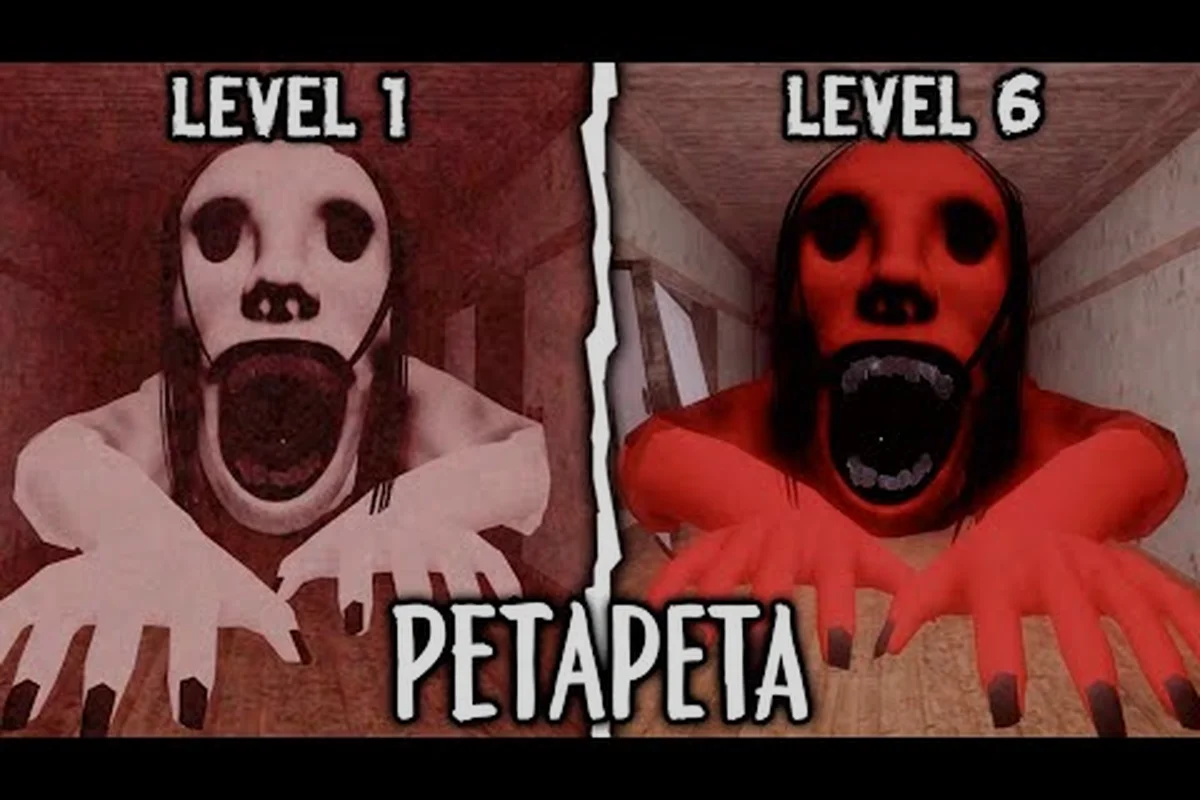
PETAPETA builds its horror around escalation, and that escalation is paced by a fixed chapter order that most players only half-understand on a first run. This PETAPETA chapter guide lays out every chapter and stage in sequence so you always know what comes next, what each segment introduces, and how the difficulty curve actually bends.
Knowing the chapter order matters because the game gates monsters, modes, and story beats behind progression. If you push into a stage without understanding what it teaches, you burn attempts on mechanics you were never meant to solve yet. Below you get the full chapters list, a stage-by-stage breakdown, and practical notes on pacing your run.
What the PETAPETA chapter structure actually looks like
PETAPETA is organized as a linear campaign of chapters, and each chapter is subdivided into shorter stages that function as individual encounters or puzzle-horror segments. The chapter order is fixed — you cannot skip ahead — but the internal stage order within a chapter is what most players misremember, because stages blend into one another with minimal loading breaks.
The structure follows a consistent rhythm. A chapter opens with a low-threat stage that establishes the environment, escalates through one or two monster-heavy stages, and closes with a set-piece that usually introduces a new threat or a story reveal. That pattern repeats, which is why the PETAPETA stage guide below groups stages by function rather than just numbering them.
A few structural facts worth locking in before you start: the chapter count is fixed rather than open-ended, so "PETAPETA all chapters" means a finite list you can plan a full run against, and every stage inherits its parent chapter's threat tier — a Chapter 4 stage 1 encounter rolls Chapter 4 monster tables even though it's the easiest fight in that chapter. That inheritance is why the PETAPETA stage guide below tags each stage with both its chapter tier and its in-chapter position, since the two numbers tell you different things about what you're walking into.
-
Chapters are the story unit — each one ends with a narrative beat or a new monster reveal.
-
Stages are the play unit — a stage is what you actually load into, fail, and retry.
-
Progression is strictly linear — no branching paths, no optional chapter skips.
-
Difficulty ramps per chapter, not per stage — the hardest stage of Chapter 3 is still easier than the opening stage of Chapter 4.
That last point is the single most useful thing to internalize, because it changes how you budget a full run. Players who treat every stage as an equal challenge tend to over-prepare early — burning consumables and retries on Chapter 1 and 2 opener stages that inherit a low threat tier — and under-prepare late, walking into a Chapter 4 stage 1 set-piece with the resource stockpile they should have saved for the chapter-closing reveal fight. The chapter boundary is where the real spike lives: the difficulty ramp is keyed to the chapter tier each stage inherits, not to its position number, so the jump from a Chapter 3 closer to a Chapter 4 opener is the single largest stat and monster-table delta in the campaign. Plan your PETAPETA all chapters checklist around those boundaries, not around individual stage counts.
How chapters and stages differ in practice
A chapter is a container; a stage is a session. When you die in a stage, you restart that stage, not the chapter — which means the PETAPETA chapter order is more forgiving than it first appears. You keep all progress up to the last stage checkpoint. This is why the chapters list is best read as a difficulty map rather than a strict gauntlet.
Community reports consistently describe the early chapters as tutorial-adjacent and the later chapters as the point where monster behavior becomes genuinely unpredictable. If you want the granular per-level breakdown beyond chapters, the full levels list covers individual level numbering and progression checkpoints in more detail.
For a full walkthrough of each chapter’s objectives and mechanics, see this PETAPETA chapter guide video.
The Complete PETAPETA Chapter Order
Here is the complete chapters list as the campaign presents it, with the role each chapter plays in the overall arc. Names and exact stage counts can shift slightly between versions, so treat the counts as the shape of the chapter rather than a hard guarantee — based on community data, the structure has held steady across recent builds.
| Chapter | Stage Count | Primary Focus | Difficulty |
|---|---|---|---|
| Chapter 1 | 3–4 stages | Movement, basic interaction, first scare | Tutorial |
| Chapter 2 | 4–5 stages | Monster avoidance, sound cues | Low |
| Chapter 3 | 5–6 stages | Chase sequences, hiding mechanics | Moderate |
| Chapter 4 | 5–6 stages | Multi-monster stages, resource pressure | High |
| Chapter 5 | 6–7 stages | Set-piece encounters, story payoff | Very high |
| Final Chapter | 3–4 stages | Climax, ending branch | Peak |
The pattern to notice is that stage counts grow through the middle chapters and then contract at the end. The final chapter is short but dense — it front-loads the hardest encounters and gives you very little breathing room between them. That contraction is deliberate pacing, not a content cut.
Chapter 1 and 2: the teaching chapters
The opening two chapters are where PETAPETA quietly teaches you its rules without a tutorial overlay. Chapter 1 is almost entirely about movement and interaction — you learn how the camera behaves, how doors and objects respond, and what a scare feels like before anything can actually kill you.
Chapter 2 introduces the first real monster threat and, more importantly, the sound design that governs it. According to player experience, the audio cues in Chapter 2 are the most reliable warning system in the entire game, and players who learn to read them here have a much smoother time in Chapter 3. Do not rush these stages. The PETAPETA stage guide value in the early chapters is calibration, not challenge.
Stage-by-stage breakdown of the PETAPETA chapter order
This section walks the chapter order with the function of each stage group. Rather than listing every stage number, it groups them by what they demand from you, which is more useful when you are deciding whether to push forward or replay a segment.
| Stage Group | What It Tests | Failure Cost | Recommended Approach |
|---|---|---|---|
| Opening stage | Observation, pathing | Very low | Explore fully, learn the layout |
| Mid stages | Timing, avoidance | Low to moderate | Move deliberately, listen first |
| Chase stage | Reaction speed | Moderate | Learn the route before sprinting |
| Set-piece stage | Combined mechanics | High | Reset if you lose resources early |
| Chapter closer | Story + new threat | High | Expect a new monster behavior |
The chase stage is the recurring wall. Nearly every chapter from Chapter 3 onward contains at least one sequence where standing still is fatal and the correct path is not obvious on a first attempt. Community reports suggest most deaths cluster here, and the fix is almost always route knowledge rather than reflexes.
Why the mid-chapter stages matter most
The middle stages of each chapter are where the PETAPETA all stages experience is actually defined. Openers are gentle, closers are dramatic, but the mid stages are the sustained pressure that teaches you to manage tension over time. If you find a chapter frustrating, the problem is usually that you are treating the mid stages as filler and rushing them.
A practical habit: on your first pass through any mid stage, prioritize mapping exits and hiding spots over reaching the objective. The objective will still be there. Knowing where you can break line of sight is what converts a panic death into a clean escape.
How to pace your run through all chapters
Pacing is the difference between a tense, satisfying campaign and a frustrating grind. The chapters list is linear, but your approach to it should not be uniform — some chapters reward patience, others reward momentum. Chapter 1's slow exploration teaches you the map language and sound cues you will lean on later, while Chapter 5's set-pieces punish hesitation and reward decisive movement once the pattern is learned. Treat the chapter order as a spine, not a script: budget extra time for the chase and multi-monster stages, and save your clean, no-death attempts for when you already know each stage's rhythm.
Here is a workable pacing plan built around the chapter order: front-load exploration in Chapters 1–2 while the game is still teaching map language and sound cues, then tighten up once Chapter 3's chase stages arrive, since those are the first sections that punish a wandering pace. Budget your item hoard deliberately through Chapter 4's multi-monster stages rather than spending on early encounters, and treat Chapter 5's set-pieces as pattern-learning runs where a death or two is expected rather than a failed attempt. Reserve your clean, no-death pushes for the final chapter, which is short and dense enough that fatigue alone will cost you the run.
-
Chapter 1–2: explore everything. No time pressure, no penalty for wandering. Learn the map language.
-
Chapter 3: slow down at chases. Replay the chase stage once deliberately before attempting a clean run.
-
Chapter 4: manage resources early. Multi-monster stages punish wasted items, so hoard until the set-piece.
-
Chapter 5: accept deaths. The set-pieces are designed to kill you once while you learn the pattern.
-
Final chapter: full focus. Short, dense, and unforgiving — do not attempt it tired.
The most common pacing mistake is treating Chapter 4 like Chapter 2. By the fourth chapter, the game assumes you already understand sound cues and hiding, so it stops teaching and starts testing. Players who never internalized the Chapter 2 audio lessons hit a hard wall here.
When to replay a stage instead of pushing on
Replay a stage when you finish it with no resources left, when you cannot explain why you survived, or when you died more than three times to the same encounter. Those three signals mean you got through on luck rather than understanding, and the next stage will expose it.
Pushing forward after a lucky clear is the single biggest cause of chapter-boundary frustration in PETAPETA. The game does not soften the next stage to compensate for your depleted state. A short replay now saves a long retry loop later.
Monsters, modes, and how chapters connect to the rest of the game
The chapter order is not isolated from the rest of PETAPETA's systems. Each chapter introduces or escalates a monster, and those monsters carry into the game's other modes once unlocked. Understanding which chapter introduces which threat makes the later chapters far more readable.
The monster guide breaks down every creature's behavior in detail, but the chapter connection is simple: the monster you meet in a chapter's set-piece is the one that defines the next chapter's mid stages. The game reuses threats deliberately, layering new behavior onto familiar silhouettes.
| Chapter | Monster Introduced | Behavior Change |
|---|---|---|
| Chapter 2 | First stalker type | Predictable patrol |
| Chapter 3 | Chase variant | Faster, reacts to sound |
| Chapter 4 | Second stalker type | Patrols in pairs |
| Chapter 5 | Combined threat | Switches behavior mid-stage |
That layering is why the PETAPETA all chapters experience feels like a single escalating story rather than a playlist of unrelated scares. The game is teaching you one monster at a time, then combining them: the Chapter 2 stalker's predictable patrol becomes the baseline you learn to read, the Chapter 3 chase variant adds sound reactivity on top of that same silhouette, and by Chapter 5 the combined threat switches behavior mid-stage — forcing you to apply both lessons at once. This is also why the chapter order matters for the other modes: monsters carry over once unlocked, so a player who rushed Chapter 4 without internalizing the paired-patrol pattern will struggle when that same threat reappears outside the campaign.
Modes and chapter unlocks
Completing chapters unlocks additional ways to play. The game modes overview explains what each mode does, but the short version is that the campaign is the gate — you cannot access the alternate modes until you have cleared enough chapters to prove you understand the base mechanics. That gating is intentional and keeps the modes from feeling overwhelming.
Common mistakes players make with the chapter order
Most PETAPETA frustration traces back to a handful of repeatable mistakes, and nearly all of them are about misreading the chapter order rather than lacking skill. The core problem is that players memorize a sequence of stage numbers from one playthrough and then treat it as universal, so when a chapter boundary shifts they misjudge which stage they are actually on and prepare for the wrong threat. A concrete example: a run that assumes chapter 3 ends after a fixed number of stages will carry the wrong items into chapter 4's opening exploration stage, where the layout is taught rather than tested. Reading the chapter order as a set of boundaries — not a stage tally — keeps your routing decisions tied to what each chapter actually demands.
-
Treating stage counts as fixed. They vary slightly by version, so plan around chapter boundaries, not exact stage numbers.
-
Skipping the exploration stage. The opening stage of each chapter is where the layout is taught — skipping it means learning under pressure later.
-
Ignoring audio. The sound cues are the most consistent warning system in the game, and they carry across every chapter.
-
Hoarding nothing and hoarding everything. Both extremes fail; the mid chapters reward measured use.
-
Attempting the final chapter on a low-attention run. It is short but demands full focus.
The jumpscares and deaths breakdown is worth reading alongside this guide, because knowing which stages contain scripted scares helps you separate a designed fright from an actual threat. That distinction alone prevents a lot of wasted panic.
Reading the difficulty curve correctly
The difficulty curve in PETAPETA is stepped, not smooth. Each chapter is a plateau followed by a jump at the boundary. Players who expect a gradual slope get blindsided at every chapter transition, while players who expect the jump prepare for it and barely notice.
If you want the full completion picture — including how chapters feed into the ending branches — the endings guide covers what changes based on how thoroughly you clear each chapter. Chapter completion depth, not just chapter completion, affects what you see at the end.
Frequently Asked Questions
How many chapters does PETAPETA have?
The campaign runs six chapters, with the final chapter being the shortest but hardest. Stage counts per chapter range from three to seven depending on the chapter and the game version, so the total stage count lands in the low thirties. Community reports describe the structure as stable across recent builds.
Can you skip chapters in PETAPETA?
No. The PETAPETA chapter order is strictly linear, and progression is gated behind completing each chapter's closing stage. There are no branching paths or optional skips, which is why understanding the order in advance is the most useful preparation you can do before starting a run.
Which chapter is the hardest in PETAPETA?
Chapter 5 is generally considered the hardest because its set-piece stages combine multiple monster behaviors at once. The final chapter is shorter but demands more precision per stage. Most players report the Chapter 4 to Chapter 5 transition as the single biggest difficulty jump in the campaign.
Do stage counts change between versions?
They can shift by one stage in either direction, based on community data across builds. The chapter boundaries and the order of chapters have remained consistent, so plan your pacing around chapters rather than memorizing exact stage numbers that may not match your version.
What should I do if I keep dying in the same stage?
Replay it deliberately with the goal of mapping exits and hiding spots rather than reaching the objective. Deaths that cluster in one stage almost always mean you are missing route knowledge, not reflexes. Once you know where to break line of sight, the stage usually clears in one or two attempts.
The PETAPETA chapter guide above is built to be read once before you start and skimmed again at each chapter boundary. The chapters list is linear and the stage order is fixed, so the real skill is pacing — treating early chapters as calibration, mid chapters as sustained pressure, and the final chapter as a short, focused sprint. Get the chapter order straight in your head, respect the difficulty steps at each boundary, and the campaign's escalation stops feeling unfair and starts feeling earned.