
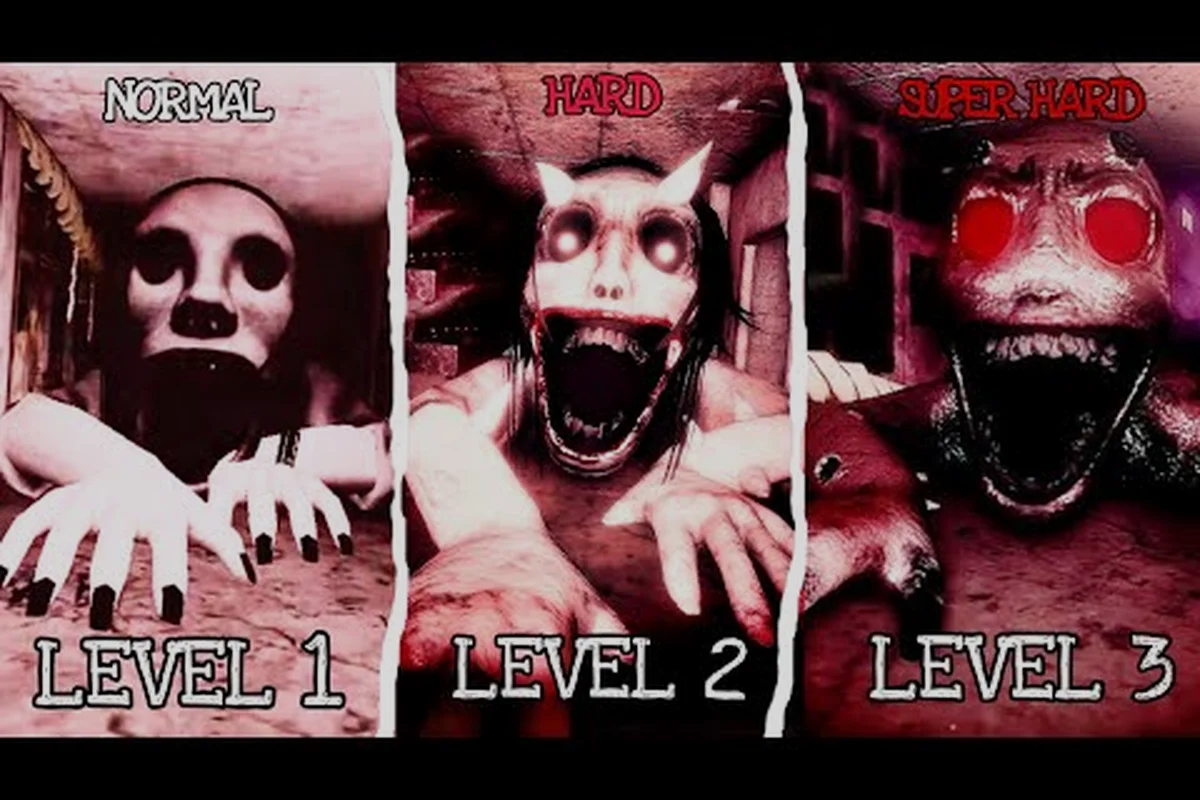
PETAPETA Mini Peta are the small, fast swarm creatures that turn a quiet corridor into chaos the moment you stop moving. This PETAPETA mini peta guide explains how the little ones behave, how their variants differ, and which movement habits keep them from piling onto you.
What Makes PETAPETA Mini Peta Different From Other Monster Types
Mini Petas are not a weaker version of a big monster — they are a different design entirely. Where the larger threats in PETAPETA telegraph a single heavy attack and then recover, the small ones apply pressure through numbers and speed. One Mini Peta is a nuisance. Six of them, arriving from two directions while you are mid-interaction, is how most runs end.
| Design Property | Large PETAPETA Monster | Mini Peta | Effect on Player Behavior |
|---|---|---|---|
| Health pool | Survives multiple clean hits | Low enough that one clean hit removes it | Threat is count, not per-creature damage |
| Death behavior | Dies outright on kill | Split-on-death variants spawn smaller copies | Bursting the swarm too fast can increase body count |
| Movement pattern | Telegraphs a single heavy attack, then recovers | Circles instead of charging | Stationary targets get boxed in from multiple angles |
| Punished player state | Bad aim / mistimed dodge | Hesitation / standing still to heal or interact | Three seconds of stillness is the failure window |
| Encounter type | Set-piece puzzle with a correct answer | Tempo test with a correct pace | Big monsters reward pattern reading; Mini Petas reward pacing |
The design intent shows up in three places: the health pool, the death behavior, and the movement pattern. Each one is tuned to make a single Mini Peta feel trivial while making a group of them lethal. A Mini Peta's health is low enough that any clean hit removes it, so the threat is never the damage of one creature — it is the fact that killing one does not always reduce the count. Split-on-death variants replace themselves with smaller copies, meaning a player who bursts the swarm down too fast can end up facing more bodies than they started with. And because Mini Petas circle instead of charging, they punish a stationary target: a player who stops to heal or interact gets boxed in from multiple angles rather than hit once and given room to recover.
-
Low individual health — a single clean hit usually removes one, so the threat is never raw damage per creature.
-
Split-on-death behavior — some variants break into smaller copies instead of dying outright, which is why the swarm can grow while you fight it.
-
Constant repositioning — they circle rather than charge, so a stationary player gets surrounded instead of hit once.
That combination is why community reports consistently describe Mini Petas as the monster type that punishes hesitation rather than bad aim. You can miss a swing at a big monster and survive. Standing still for three seconds while a swarm closes in usually does not end well.
It also explains why the swarm feels so different from the set-piece encounters covered in the full PETAPETA monster guide. Big monsters are puzzles with a correct answer. Mini Petas are a tempo test with a correct pace.
How the Swarm Splits: PETAPETA Monster Variants Explained
The split mechanic is the single most misunderstood part of fighting these creatures. Players see the count go up after a kill and assume they are doing something wrong. In reality, splitting is scripted — it is the variant's whole identity, not a punishment for a bad hit.
The Three Core Mini Peta Variants
| Variant | Base Behavior | On Death | Threat Level |
|---|---|---|---|
| Standard Mini Peta | Circles at mid range, lunges in pairs | Dies cleanly | Low |
| Splitter Mini Peta | Circles wider, keeps distance | Breaks into two smaller copies | Medium |
| Charger Mini Peta | Lines up and dashes in a straight line | Dies cleanly, brief stagger | Medium-High |
The Splitter Mini Peta is the one that catches people out. Kill it in open ground and you now face two smaller, faster copies that inherit its circling behavior. Kill those and the chain ends — the split only happens once per lineage, according to community testing. That single fact changes the correct play: Splitters should be killed last among a group, or killed in a doorway where the copies have nowhere to spread.
The Charger Mini Peta is the opposite problem. It dies easily but its dash covers ground fast enough to interrupt an interaction or a puzzle input. Players who treat every small monster identically get clipped by the charger while focusing on a Splitter.
Why Variant Mixing Is the Real Difficulty Spike
A room with four Standard Mini Petas is manageable. A room with two Standards, one Splitter, and one Charger is where PETAPETA harder monsters start to feel genuinely unfair — not because any single creature is strong, but because the correct response to each one conflicts with the others. You want to hold ground against the Charger, retreat from the Splitter, and keep moving against the Standards.
That conflict is deliberate. The swarm is designed so that no single defensive habit solves it, which is why the next section focuses on movement rather than damage. Consider the practical outcome: if you commit to holding ground for the Charger, the Splitter's death burst forces you off that same spot, and the retreat you just triggered drags you into the Standards' contact range. Because each PETAPETA monster variant punishes the counter that answers its neighbor, the room's threat comes from overlapping answer windows rather than raw stats — and no amount of damage output shortens those windows. That is the actual difficulty spike in PETAPETA harder monsters: your positioning budget, not your health bar, is the resource being drained.
Why Standing Still Gets You Killed
The most common death against Mini Petas is not a big hit — it is a slow accumulation. Each small monster deals modest damage, but they attack from angles you are not facing, and their circling behavior means the safe side of your character keeps changing.
Here is what actually happens when you stop: the Mini Peta swarm switches from opportunistic poking to a coordinated collapse. Because each Mini Peta re-aims its lunge the moment you commit to a stationary swing, standing still removes the only variable that was spreading their damage across your sides — every attacker now converges on the same facing arc. The result is a damage spike that looks sudden but is really the sum of four or more small hits landing inside the same second, which is why players often misread a swarm death as a one-shot.
-
The ring closes — circling creatures tighten their radius the longer you stay put, so the gap you were watching disappears.
-
Attack angles multiply — with four or more alive, at least one is always behind you, and the swarm times its lunges to overlap.
-
Interactions get interrupted — puzzle inputs and door interactions in PETAPETA lock you in place briefly, which is exactly the window a swarm needs.
The practical takeaway is that movement is your primary defense against Mini Petas, not your weapon. A player who keeps a slow, deliberate circle going takes far less damage than one who plants their feet and swings harder. If you are already struggling with disengaging from pressure, the techniques in the escaping and hiding guide translate directly to swarm situations.
The Two-Second Rule
A useful habit reported by players: never remain stationary for more than about two seconds while any Mini Peta is alive and within sight. Two seconds is roughly the window between a creature committing to a lunge and the lunge landing, so resetting your position inside that window keeps you ahead of the timing.
This does not mean sprinting constantly, which drains stamina and can leave you unable to dodge when a Mini Peta commits to its lunge. It means making small lateral adjustments — a half-step, a short strafe — rather than full repositioning. A quick sidestep of roughly one body-width is usually enough to slip outside a creature's lunge hitbox, whereas a full circle-strafe wastes the frames you need to punish the recovery window. Constant small movement costs almost nothing and denies the swarm its setup, forcing each Mini Peta to re-aim before it can land a hit.
Movement and Positioning Tactics That Actually Work
Once you accept that Mini Petas are a tempo problem, the tactics become straightforward. The goal is never to out-damage the swarm; it is to control how many of them can reach you at once. This reframes every decision: instead of asking which PETAPETA monster variant dies fastest, ask how many approach vectors you are currently exposing. A single Mini Peta lunging from open ground is trivial to sidestep, but four closing from different angles force you into the very backpedal that keeps you inside their lunge line. Treat your positioning as a funnel — terrain, doorways, and corners are the tools that convert a surrounding swarm into a one-directional queue you can actually read and react to.
| Tactic | When to Use | Why It Works |
|---|---|---|
| Back into a corner or doorway | Swarm of 4+ | Limits approach angles to one or two |
| Kill Splitters last | Mixed group | Prevents copies from spreading into open space |
| Strafe, do not backpedal | Any time | Backpedaling is slower and keeps you in the lunge line |
| Break line of sight briefly | Swarm reforming | Resets circling radius |
| Clear Chargers first in tight rooms | Narrow corridors | Their dash is the only attack that cannot be dodged laterally |
Dealing With the Split Chain
The split chain is the one place where a little planning saves a lot of health. Because Splitters only divide once, the total creature count in a room is fixed the moment you enter — you are not fighting an infinite spawn, you are fighting a known number that arrives in waves.
Count the Splitters before you engage. If a room holds two Splitters, expect up to four extra copies and plan your kill order so the copies appear in a space you control. Killing a Splitter in the middle of an open floor is the single most common way players turn an easy room into a losing one.
When to Disengage Entirely
Sometimes the correct play is to leave. If a swarm has already split and you are down to low health with no clear corner to work with, retreating to a chokepoint and re-engaging is better than trading hits in the open. The swarm does not heal, and its members do not respawn, so a reset costs you nothing but time.
Mini Petas in PVP and Multiplayer Contexts
Swarm behavior changes meaningfully when other players are involved, because Mini Petas stop being a solo DPS check and become a zoning resource. In versus scenarios they function less as a threat and more as a pressure tool: a circling cluster denies the safe standing lane, so the opponent must either eat chip damage or reposition — and forced movement is predictable movement. That predictability is the real payoff, since a player pushed off their preferred angle is committed to a direction before they can react.
Players who understand the swarm can use it to herd opponents toward a bad position, because the same circling logic that traps a stationary player also constrains where an opponent can safely stand. The PETAPETA PVP mode guide covers the broader versus strategy, but the swarm-specific principle is simple: whoever is forced to move first by the Mini Petas usually loses the exchange.
In co-op, the split mechanic becomes a coordination problem. Two players killing Splitters simultaneously in the same open area can double the copy count faster than either expects. Calling out which Splitter you are taking, and where, prevents that.
Common Mistakes With PETAPETA Mini Petas
Most swarm deaths trace back to a small set of repeatable errors, and nearly all of them are positioning or timing mistakes rather than raw damage shortfalls. Because the PETAPETA Mini Peta swarm size is fixed the moment you enter the room, the fight is decided by how you read the mix of PETAPETA monster types in front of you — Chargers that commit to a straight lunge versus Splitters that multiply on death — and whether you keep a lateral escape lane open. Fixing these habits matters more than any damage optimization, since a clean strafe and correct kill order beat a higher-damage build that eats one unnecessary lunge.
-
Treating all small monsters the same — Chargers and Splitters demand opposite responses, and mixing them up wastes the one window you get.
-
Killing Splitters in open ground — the copies spread instead of funneling, which is the worst possible outcome.
-
Backpedaling instead of strafing — retreating in a straight line keeps you inside the lunge path and is slower than a lateral step.
-
Ignoring the count — the swarm size is fixed on entry, so there is no reason to panic-kill; you have time to pick order.
-
Committing to an interaction mid-swarm — puzzle inputs and door interactions lock you briefly, and that lock is the swarm's best opening.
If you are still learning the game's broader threat patterns, the sequence puzzle guide is worth reading alongside this one, since interaction locks are where swarms and puzzles overlap most painfully. The overlap is mechanical, not thematic: a sequence puzzle input freezes your strafe for roughly the same beat a Charger needs to close its lunge, so a mid-swarm door or terminal grab converts a survivable lateral dodge into a guaranteed hit. Treat any interactable inside the arena as a pre-clear objective — resolve the sequence puzzle before the PETAPETA Mini Peta swarm spawns, or clear Chargers first and leave Splitters untouched until the lock releases — and the fixed swarm size means you can afford that patience without the count snowballing.
Frequently Asked Questions
Do PETAPETA Mini Petas respawn after you kill them?
No. The swarm size in a room is fixed when you enter, and killed Mini Petas do not come back. Splitter copies are the only way the count increases, and each Splitter only divides once, so clearing a room permanently reduces its pressure.
What is the fastest way to deal with a Splitter Mini Peta?
Kill it last in a group, and kill it in a doorway or corner so the two copies have nowhere to spread. Fighting a Splitter in open floor is what turns a manageable room into a surround, since the copies inherit its circling behavior and widen out immediately.
Are Mini Petas considered PETAPETA harder monsters?
Individually no, but in mixed groups they are among the most punishing encounters. A room combining Standards, Splitters, and Chargers forces conflicting responses, and that conflict — not raw damage — is what makes swarm rooms feel harder than many single large monsters.
Can you outrun a Charger Mini Peta?
Not in a straight line. The Charger's dash covers ground faster than normal movement, so the counter is a lateral step rather than a sprint. Strafing sideways as it commits takes you out of the dash path entirely, and the Charger staggers briefly after the dash ends.
Do Mini Petas behave differently in PVP?
Yes. Against other players they act as a pressure tool rather than a direct threat, forcing movement and making positioning predictable. Whoever the swarm forces to move first is usually at a disadvantage, which is why swarm awareness matters as much as direct combat skill in versus matches.
Mini Petas are the clearest example of PETAPETA's design philosophy: the danger is never one creature, it is the situation the group creates. Learn the three variants, respect the split chain, and keep your feet moving in small increments rather than big retreats — that combination handles almost every swarm room the game throws at you.