
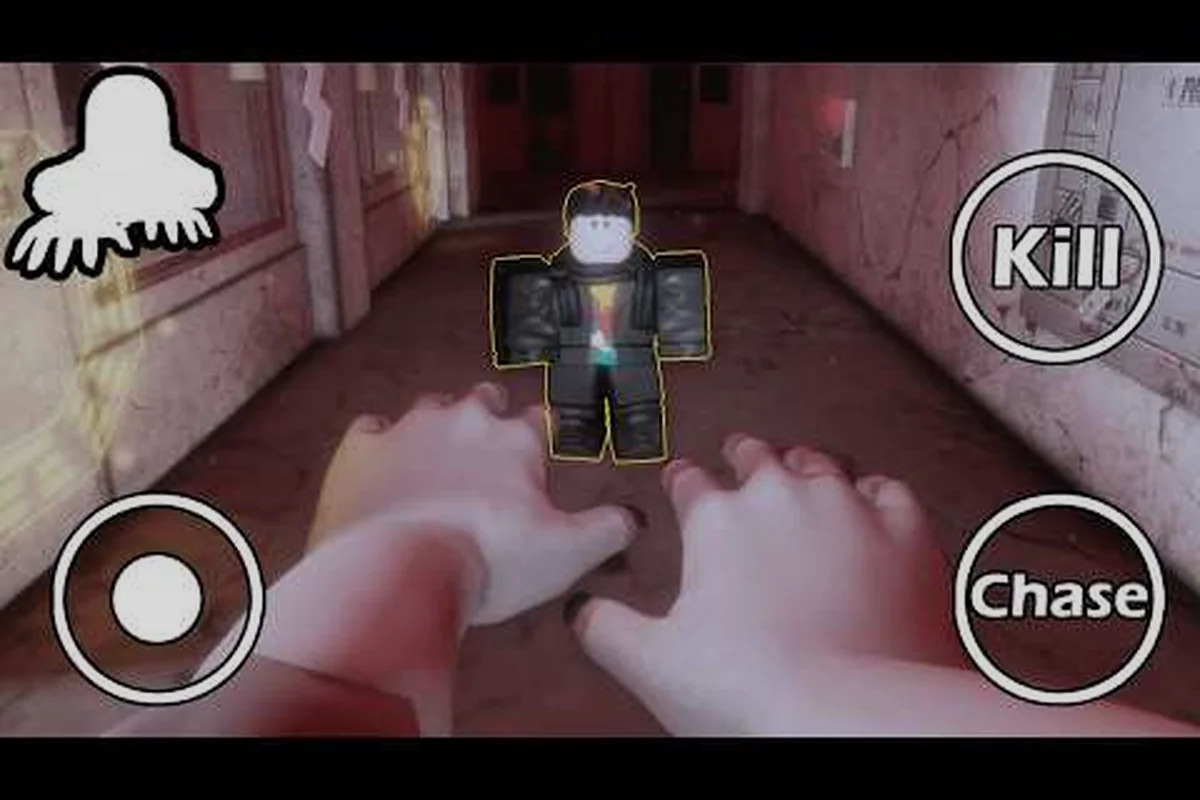
The PETAPETA backstory hides in plain sight, and the title itself is the first clue: a sound-word borrowed from Japanese onomatopoeia that describes something flat, sticky, and pressed against a surface. Understanding the PETAPETA meaning changes how you read every room in the game, because the name is not decoration — it is a warning about what the horror setting actually does to the people inside it.
What the PETAPETA name origin actually points to
The strongest reading of the PETAPETA name origin starts with Japanese sound symbolism. In that tradition, peta is the syllable used for something slapping flat against a wall, a floor, or a page — the noise of paper pressed down, or of a hand smoothing something into place. Doubling it into petapeta turns a single impact into a repeated, almost compulsive action: pat, pat, pat, until the surface is completely covered.
That repetition is the key. A name built from a repeated sound suggests a process that does not stop on its own, and the game leans into that idea everywhere. Community discussions frequently describe the title as sounding "childish but wrong," which is exactly the effect the developers appear to be aiming for — a word that feels harmless until you notice what it is describing.
Why a sound-word makes a better title than a monster name
Horror titles that name the monster directly tend to explain too much. A sound-word does the opposite: it describes a behavior without naming an agent, so the player spends the first hour wondering who or what is doing the petapeta-ing. That ambiguity is a deliberate design choice, and it is why the PETAPETA meaning resists a one-line answer.
The table below breaks down the most common interpretations of the name and how well each one holds up against what the game actually shows. Each row pairs a reading of the PETAPETA meaning with the specific evidence that supports or weakens it — from the flattened silhouettes and looping audio cues that anchor the onomatopoeia and repetition-compulsion readings, to the document props and wall coverings behind the paper-and-print theory. Confidence levels are graded accordingly, so the low-confidence regional dialect pun sits honestly at the bottom rather than being padded into false parity with the stronger readings.
| Interpretation | Core idea | Evidence in the game world | Confidence |
|---|---|---|---|
| Onomatopoeia for flattening | Something is pressed flat and stays flat | Environmental textures, flattened silhouettes | High |
| Repetition compulsion | The action repeats without end | Looping audio cues, recurring room layouts | High |
| Paper or print reference | Pages, ink, and printed surfaces | Document props, wall coverings | Medium |
| Childish nonsense word | Innocent sound hiding dread | Tone contrast in early scenes | Medium |
| Regional dialect pun | Wordplay on a local phrase | No confirmed developer statement | Low |
The first two readings reinforce each other, which is why most lore-minded players settle on a combined explanation: the title describes an endless flattening process rather than a single creature. On this reading, the onomatopoeia supplies the verb and the repetition compulsion supplies the grammar — something is being pressed flat, and it keeps happening, room after room, loop after loop. That pairing is what earns both rows a High confidence grade in the table above, since the flattened silhouettes and recurring room layouts are observable in the PETAPETA game world itself rather than inferred from a developer statement. It also explains why the paper-and-print theory stays stuck at Medium: documents and wall coverings fit the flattening motif but add nothing about the compulsion, so they decorate the backstory instead of driving it.
How the PETAPETA horror setting uses the name as a mechanic
The PETAPETA horror setting does something clever with its own title — it turns the name into a rule. Rooms in the game world are not simply decorated; they are layered, and the layers are what the title is describing. Walls carry repeated marks, surfaces look pressed, and the geometry of certain spaces suggests that something has been smoothed over rather than built.
According to community reports, attentive players have catalogued these surface details and found that they cluster around the places where the story escalates. That is not random set dressing. When a sound-word becomes the title, the environment has to earn it, and the flattened, layered look of the PETAPETA game world is the most direct translation of the name into visual design.
The three layers of the game world
Thinking about the setting in layers makes the lore much easier to follow, because each layer corresponds to one part of what the title implies: peta (ペタ) is the sound of something being slapped flat, so the world is literally built as a record of pressure applied and never released. Read top-down, the layers form a chain of cause and effect — surface normality first, then the pressed evidence of what was flattened, then the repeating geometry that shows the flattening is still happening. Once you map the PETAPETA name origin onto that chain, the backstory reads as a single mechanism rather than scattered set dressing, and details that seemed decorative (a too-clean corridor, a stain shaped like a hand) become clues pointing to the same event.
-
The surface layer — what the player sees first: corridors, rooms, and props that look ordinary but slightly too clean or too repetitive.
-
The pressed layer — the marks, stains, and impressions that suggest something was flattened into the environment and never removed.
-
The repeating layer — the structural loops in level design that make spaces feel like they are happening again rather than being visited again.
Once you notice the third layer, the PETAPETA backstory stops feeling like background flavor and starts feeling like a system. The monster lore in this game follows the same logic, and the monster lore and yokai breakdown traces how those creatures connect to the same folkloric root.
Reading the PETAPETA backstory through environmental clues
Because the game rarely states its history outright, most of the PETAPETA backstory has to be assembled from what is left behind. This is a common approach in atmospheric horror, and it rewards players who slow down. The clues fall into a few recognizable categories, and knowing which category you are looking at tells you how much weight to give it.
| Clue type | What it usually tells you | How reliable it is |
|---|---|---|
| Written notes and documents | Direct statements of intent or fear | High, but possibly unreliable narrators |
| Wall and floor textures | The physical result of past events | High, since the environment cannot lie |
| Audio loops and hums | The rhythm of the threat | Medium, open to interpretation |
| Item placement | Who was here and what they were doing | Medium |
| Room layout repetition | Structural theme, not literal history | Low as fact, high as theme |
The most useful habit is to separate what happened from what the game is saying. A flattened wall texture is evidence of an event; a room that repeats three times is a statement about the nature of the threat. Mixing the two leads to lore theories that sound clever but collapse under scrutiny.
Documents versus environment
Written notes are tempting because they speak in complete sentences, but in this genre they are usually the least trustworthy source. A note reflects what its author believed, and frightened people misread situations constantly. The environment, by contrast, has no agenda — if a corridor is layered with pressed-in shapes, that is simply what the space looks like.
Players who cross-reference both tend to land on a more stable reading of the PETAPETA meaning than those who rely on documents alone. The pattern that emerges is consistent: something in this world flattens, repeats, and covers, and the people living inside it gradually stop noticing.
What does PETAPETA mean for the player, not just the story
The question of what does PETAPETA mean has a second answer that has nothing to do with lore: it describes the player's own experience. Horror games work by repetition — you learn a route, you die, you walk it again. The title quietly acknowledges that loop, and once you see it, the design of the PETAPETA game world reads as self-aware rather than merely atmospheric.
This is where the survival tips for the horror setting become more than a list of tactics. Understanding that the game is built on repetition means you can use repetition deliberately: scouting a route twice, noting which sounds change on the second pass, and treating a familiar room as suspicious rather than safe. Familiarity is the trap the title is warning you about.
Why the name rewards a second playthrough
On a first run, most players read the title as a spooky nonsense word and move on. On a second run, the flattened surfaces, the looping audio, and the recurring layouts all snap into a single idea. That shift is one of the strongest reasons the game holds up to replay, and it is a design decision rather than an accident.
| Playthrough | How the title reads | What changes |
|---|---|---|
| First run | A strange, unsettling word | Nothing — the name is just atmosphere |
| Second run | A description of the threat's behavior | Surface details become legible |
| Lore-focused run | A thesis statement about repetition | Environmental clues form a pattern |
The third row is where most lore hunters end up, and it is also where the beginner guide to the core loop stops being useful and deeper analysis takes over. At this stage the flattened surfaces stop reading as set dressing and start reading as evidence: repeated wall textures, looped audio cues, and recycled room layouts become the data points you cross-reference against each other. The pattern only resolves when you treat the title as a claim about the threat's behavior — the environment re-enacting the same moment — rather than as a label for the setting, which is why lore-focused runs trade the beginner guide's route efficiency for slow, deliberate re-inspection of rooms you have already cleared.
The folkloric roots behind the PETAPETA name origin
Japanese folklore is full of creatures defined by a single behavior rather than a full personality, and the PETAPETA name origin fits that tradition closely. A yokai built around one repeated action — counting, licking, stretching — is a familiar shape in that storytelling culture, and a creature defined by pressing or flattening slots neatly into the same family.
Community comparisons often draw lines to well-known behavior-based spirits, and while no developer statement confirms a specific inspiration, the structural resemblance is hard to ignore. The important takeaway is not which spirit inspired the name but what the pattern implies: a threat with a single, endlessly repeated rule is far more frightening than one with complex motives, because you can predict it and still fail to escape it.
Behavior-based threats versus motive-based threats
| Threat type | How it creates fear | Example pattern in the game |
|---|---|---|
| Behavior-based | Predictable rule, inescapable outcome | The flattening process never stops |
| Motive-based | Unpredictable intent, negotiation possible | Rare in this setting |
| Environmental | No agent at all, only conditions | Layered rooms and pressed surfaces |
Behavior-based threats dominate the PETAPETA horror setting, and that choice is consistent with a title built from a repeated sound. The full game mechanics overview explains how those rules translate into actual play, including the timing windows that make the repetition survivable.
How to build your own reading of the PETAPETA backstory
Lore in this game is deliberately incomplete, so the most satisfying approach is to build a reading and then test it against the game world rather than waiting for a definitive answer. Treat the PETAPETA backstory less like a puzzle with a locked solution and more like a hypothesis you refine: the name's echo of "peta," the Japanese onomatopoeia for something flat and pressed, gives you a starting claim about flattening and repetition, and every room you enter either supports or breaks that claim. A workable method looks like this:
-
Write down the name's implications first — flattening, repetition, covering — before you look at any evidence.
-
Log every surface detail you notice in a single run, without trying to interpret it yet.
-
Separate physical evidence from written claims, and weight them differently.
-
Check whether your theory explains the level layouts, not just the props.
-
Discard any theory that requires ignoring a major environmental clue.
The last step matters most. A reading of the PETAPETA backstory that only works if you ignore half the rooms is not a reading — it is a guess. The strongest interpretations explain the textures, the loops, and the documents at the same time, even if they leave some questions open.
That openness is intentional. A title made from a sound rather than a noun leaves room for the player to complete the meaning, and the game trusts you to do it. The level walkthrough and completion route is a useful cross-check here, since a speedrun strips away atmosphere and shows you the structural skeleton of each area — which is often where the repetition theme is clearest.
Frequently Asked Questions
What does PETAPETA mean in the game?
The most supported reading is that the title comes from Japanese sound symbolism for something being pressed flat, repeated over and over. It describes a process rather than a creature, which is why the game world is full of flattened surfaces, layered textures, and rooms that seem to repeat themselves.
Is the PETAPETA name origin officially confirmed?
No developer statement has confirmed a single source, so the onomatopoeia reading is an interpretation supported by in-game evidence and community analysis rather than an official explanation. Treat it as the strongest available reading, not a settled fact, and keep testing it against new environmental clues.
Why does the title use a sound word instead of a monster name?
A sound word describes a behavior without naming an agent, which preserves mystery for the first playthrough. It also matches the horror setting's design, where the threat is defined by a single repeated rule rather than by motives a player could reason with or negotiate around.
Does the PETAPETA backstory change on a second playthrough?
Yes, in effect. The environmental details stay the same, but once you know what the title implies, flattened textures and looping layouts become legible as evidence. Most lore-focused players report that the second run feels like a different game because the repetition theme becomes obvious.
Is the PETAPETA game world based on Japanese folklore?
It draws on the same structural tradition — creatures defined by one repeated behavior — but no specific yokai has been confirmed as the inspiration. The resemblance is thematic, and it fits a title built from a repeated sound rather than a named spirit.
The name is the thesis: something in this world presses, repeats, and covers until nothing looks disturbed anymore. Read the title as a description of that process, and the PETAPETA backstory stops being a puzzle with a missing piece and becomes a pattern you can follow through every room.